Polygon’s hands-on with Into the Wind, the upcoming PC game described as Kiki’s Delivery Service meets Porco Rosso, was a reminder that Studio Ghibli’s aesthetic is one of the most durable design templates in games. The watercolour palettes, the slow opening shots, the small communities, the relationship between landscape and emotion: these are not Ghibli-exclusive, but the studio crystallised them and a wave of indie games has been building on the same vocabulary ever since.
We tested 8 of the best Studio Ghibli style games on desktop. The benchmark was specific: how each treats wind, weather, and the natural world; how the score sits under play; whether the writing earns the visual; and whether the systems serve the mood or fight it. None of these is a Ghibli-branded game. They borrow the visual and tonal grammar in a way that feels honest to the source.
What to look for in a Studio Ghibli style game
- Painterly art direction over photorealism. Watercolour, hand-drawn, or stylised 3D that reads as a moving illustration.
- Pace. Ghibli films breathe. Games that earn the comparison let the player linger.
- Music. A score that sits behind the world without pushing it.
- Wind, weather, and landscape as characters. Trees that move, light that travels, weather that shapes a scene.
- Writing that respects the audience. Small stakes can carry a story; manufactured ones can not.
- Single-sitting and long-form work both. Some Ghibli films are 90 minutes; some games on this list are 30 hours.
Quick comparison
| Game | Best for | Platforms | Free plan | Standout feature |
|---|---|---|---|---|
| Spiritfarer | Closure, grief, and care work | Windows, macOS, Linux | No (one-time purchase) | A management sim where the systems serve a story about loss |
| Ni no Kuni II: Revenant Kingdom | An actual Ghibli-adjacent JRPG | Windows | No (one-time purchase) | Studio Ghibli alumni on art and music |
| Ori and the Blind Forest | A platformer that looks like a moving painting | Windows | No (one-time purchase) | Wind, water, and light as gameplay elements |
| Sable | A coming-of-age open world in a desert | Windows | No (one-time purchase) | Moebius-meets-Ghibli aesthetic with no combat |
| Eastward | A pixel-art adventure with hand-painted backgrounds | Windows, macOS | No (one-time purchase) | A father-and-daughter road trip with a strong score |
| Tunic | A small fox and a hidden world | Windows, macOS, Linux | No (one-time purchase) | A game built around a paper manual you can read |
| The First Tree | A short, contemplative platformer | Windows, macOS, Linux | No (one-time purchase) | Under three hours, a complete short film |
| Hollow Knight | A Metroidvania with a melancholy world | Windows, macOS, Linux | No (one-time purchase) | A world that rewards exploration with quiet beats |
The 8 best Studio Ghibli style games on desktop
1. Spiritfarer — best for the emotional weight
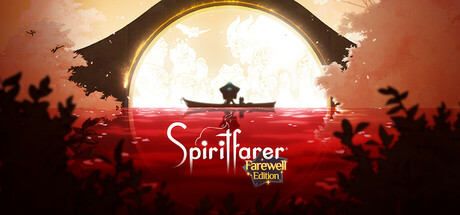
Spiritfarer is the cleanest single answer to the question of which game is most “like a Ghibli film.” Thunder Lotus’s management sim asks you to ferry departing spirits to the afterlife on a boat that grows with you. The systems are about care: cooking the right meals, building the right rooms, learning each passenger’s story before they choose to move on. The 2D art is hand-drawn and the score sits under the work without overplaying it.
Where it falls short: The crafting loop is real and players who do not enjoy resource gathering will feel its weight. Some passenger arcs are stronger than others.
Pricing:
- Free: none
- Paid: one-time purchase
Platforms: Windows, macOS, Linux
Download: store.steampowered.com/app/972660
Bottom line: Pick Spiritfarer if you want the Ghibli-adjacent game that takes its emotional premise seriously.
2. Ni no Kuni II: Revenant Kingdom — best JRPG with actual Ghibli credits
Ni no Kuni II is the entry on this list with the most direct Ghibli connection. Joe Hisaishi composed the first game’s score, and a number of former Studio Ghibli artists worked on the sequel’s cutscenes and character design. The result is a JRPG with a real-time combat system, a small kingdom to manage, and a charming protagonist whose arc earns its emotional beats.
Where it falls short: Combat is shallow compared to other modern JRPGs. The first 5 hours move slowly. Windows-only on desktop.
Pricing:
- Free: none
- Paid: one-time purchase
Platforms: Windows
Download: store.steampowered.com/app/589360
Bottom line: Pick Ni no Kuni II if you want a JRPG that actually has Studio Ghibli alumni in its credits.
3. Ori and the Blind Forest — best Ghibli-style platformer
Ori and the Blind Forest (and its sequel Ori and the Will of the Wisps) is the platformer most often compared to a Ghibli film. The art direction reads like a moving illustration, the score is restrained and consistently good, and the prologue alone is one of the most affecting scenes in any 2D game of the past decade. The movement system is tight, which is rare in this style of game.
Where it falls short: The platforming difficulty spikes in places. Some of the escape sequences feel out of step with the rest of the game.
Pricing:
- Free: none
- Paid: one-time purchase
Platforms: Windows
Download: store.steampowered.com/app/261570
Bottom line: Pick Ori and the Blind Forest if you want a Ghibli-feeling platformer with a real challenge underneath.
4. Sable — best Moebius-meets-Ghibli open world
Sable is an open-world coming-of-age game with no combat. The art is more Moebius than Ghibli on the surface (clean lines, large negative space), but the tone is shared: a young protagonist on a journey, a world that rewards lingering, a story that respects small choices. Players who can settle into the pace get one of the most distinctive worlds on PC.
Where it falls short: Performance was uneven at launch and improvements arrived in patches. The frame rate on some Windows configurations still wobbles. Some players miss having combat or stakes.
Pricing:
- Free: none
- Paid: one-time purchase
Platforms: Windows
Download: store.steampowered.com/app/757310
Bottom line: Pick Sable if you want an open world to wander in and you find that combat usually gets in the way of mood.
5. Eastward — best pixel-art road-trip adventure
Eastward is a pixel-art adventure that pairs a stoic miner father and a wide-eyed daughter on a journey through a post-apocalyptic Japan-inspired world. The hand-painted backgrounds and the lighting are the closest 16-bit-style work has come to a Ghibli film, and the soundtrack consistently earns its scenes.
Where it falls short: Pacing slows in the middle act. Combat is functional but never quite earns its time on screen.
Pricing:
- Free: none
- Paid: one-time purchase
Platforms: Windows, macOS
Download: store.steampowered.com/app/977880
Bottom line: Pick Eastward if you want pixel art at the level of a film and a story about a parent and a child that earns its emotional beats.
6. Tunic — best small-fox adventure with a paper manual
Tunic is an isometric action-adventure about a small fox in a hidden world, and the central conceit is a manual the player slowly assembles from pages found in the world. The art is gentler than its inspirations (Zelda, Souls), and the visual storytelling is the strongest reason to put it on a Ghibli-style list. The reveal of what the manual actually means is one of the best in any game of the past few years.
Where it falls short: Some of the late-game challenges spike into Souls-like difficulty without much warning. Players who prefer to follow guides may find the manual gimmick frustrating.
Pricing:
- Free: none
- Paid: one-time purchase
Platforms: Windows, macOS, Linux
Download: store.steampowered.com/app/553420
Bottom line: Pick Tunic if you want a gentle world that hides a deep game, and a manual you slowly piece together.
7. The First Tree — best short, contemplative experience
The First Tree is a short third-person platformer about a fox searching for her cubs, with a parallel narrative about a son returning to his parents. The game runs under three hours and is essentially a playable short film. Critics were divided at launch and the game is the lightest in this list mechanically, but the mood is more directly Ghibli than almost anything else.
Where it falls short: The platforming is loose. The dual-narrative framing does not always land. Some players want more game.
Pricing:
- Free: none
- Paid: one-time purchase
Platforms: Windows, macOS, Linux
Download: store.steampowered.com/app/597220
Bottom line: Pick The First Tree if you want a short, Ghibli-soft sitting and you do not need a long mechanical loop.
8. Hollow Knight — best Metroidvania with a Ghibli melancholy
Hollow Knight is darker than most Ghibli films but shares a key trait: a quiet world that respects the player’s curiosity. Team Cherry’s hand-drawn 2D, the restrained sound design, and the willingness to leave so much of the lore implicit all read as deeply Ghibli-influenced. The Metroidvania map is one of the most rewarding in any modern game, and the sequel Silksong is on the way.
Where it falls short: Difficulty spikes. The world is large enough that some players bounce off the first hour or two.
Pricing:
- Free: none
- Paid: one-time purchase
Platforms: Windows, macOS, Linux
Download: store.steampowered.com/app/367520
Bottom line: Pick Hollow Knight if you want a Ghibli-soft Metroidvania and you do not mind earning the world’s quieter beats through real challenge.
How to pick the right one
- If the emotional weight is the point: Spiritfarer.
- If you want a JRPG with actual Studio Ghibli alumni in the credits: Ni no Kuni II.
- If you want a platformer with a Ghibli look and a real challenge: Ori and the Blind Forest.
- If you want to explore and not fight: Sable.
- If you want pixel art at the level of an animated film: Eastward.
- If you want a small fox and a clever hidden world: Tunic.
- If you have an evening and you want a complete short story: The First Tree.
- If you want a long Metroidvania with a Ghibli melancholy: Hollow Knight.
FAQ
Is there an actual Studio Ghibli video game?
There is no Studio Ghibli-branded game. Ni no Kuni II is the closest, with former Ghibli artists involved in cutscenes and design. The rest of the games on this list are inspired by Ghibli’s aesthetic and tone rather than affiliated with the studio.
Will Into the Wind release on PC?
Polygon’s preview indicates Into the Wind is planned for a PC release. The game is not out yet at the time of writing; consider this list the best of what is already playable.
Are these games suitable for kids?
Most of them are. Spiritfarer deals with death; Hollow Knight has light combat; The First Tree’s narrative discusses loss. None of them is graphic. The closest to a Ghibli child-suitability bar would be Ni no Kuni II and The First Tree.
What is the closest open-world Studio Ghibli style game?
Sable. The desert landscape, the no-combat structure, and the small encounters that build a coming-of-age story land closest to the Ghibli open-air feeling.
Is there a co-op Studio Ghibli style game?
None of these support co-op. Spiritfarer comes closest with a local couch-co-op companion character, but the main game is single-player. If co-op is the priority, look at the Stardew Valley alternatives list instead.